What are food grade silicone molds?
Food grade silicone molds are flexible, reusable molds made from silicone that is safe for contact with food. They are used to shape chocolate, cakes, candy, gummies, ice and frozen desserts. Food-grade silicone does not react with food, does not add taste or smell, and can usually be used in the oven, fridge, freezer and dishwasher.
FDA rules for food-contact silicone
In the USA, silicone rubber that touches food again and again is covered by the FDA rule 21 CFR 177.2600, "Rubber articles intended for repeated use". When you buy food molds, ask the manufacturer which silicone they use and whether it meets this rule. If you also sell in Europe, buyers often ask for LFGB test results as well.
- Ask which silicone grade is used
- Ask for the food-contact certificate
- Check the heat limit for your use
Why platinum silicone is used for food
There are two main types of mold-making silicone. Platinum cure silicone sets cleanly without leaving harmful by-products, has no smell and lasts longer, so it is the type used for food molds. Tin cure silicone is lower in cost but is not used for food. Every food mold we make uses food-grade platinum silicone.
Heat and cold limits
Most food-grade silicone handles about −40°F to 446°F (−40°C to 230°C), depending on the grade. That covers baking, chocolate work, freezing and dishwashers. For hot sugar, caramel or long baking, a high-temperature food grade can be used. We confirm the heat limit for your molds with every order.
Machines used to make food grade molds
Food grade silicone mold making uses a few key machines, and each one has a clear job:
- CNC machines are used to cut accurate master models.
- Vacuum chambers are used to remove trapped air, so molds are free of bubbles.
- Curing ovens are used to set the silicone fully and evenly.
- Hardness testers are used to check each mold is as soft or firm as it should be.
How food molds are kept clean
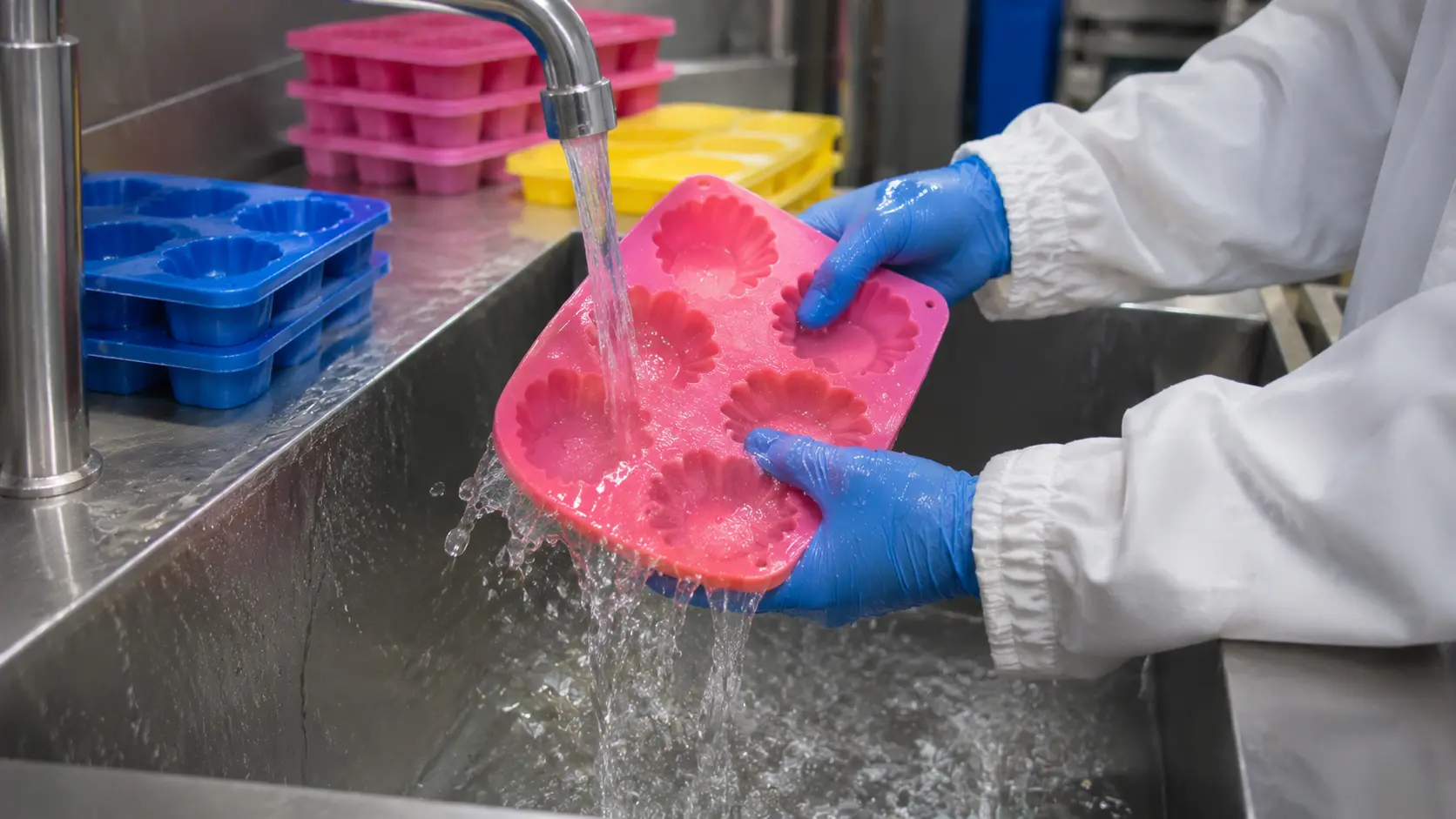
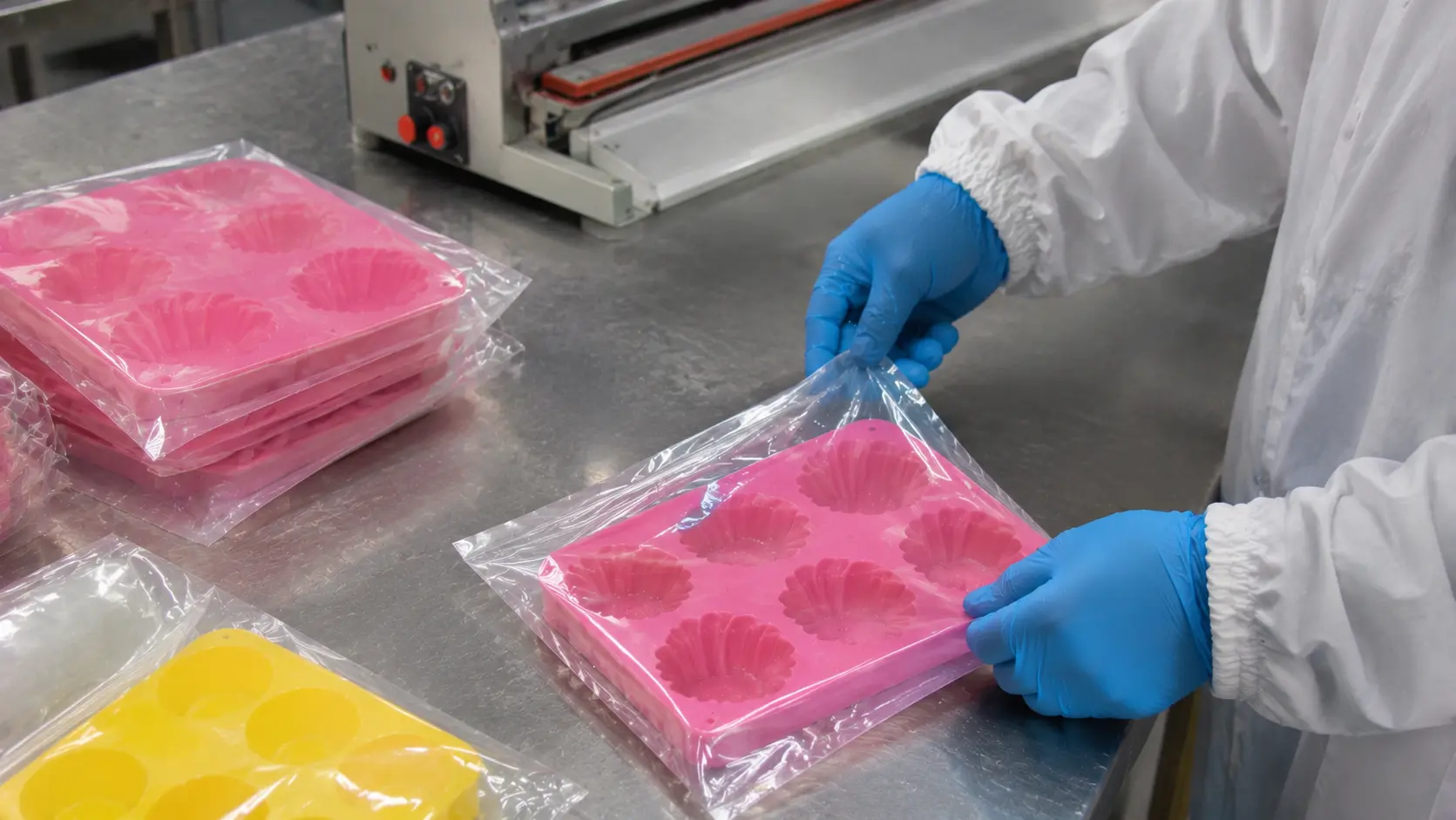
Food molds should never share tools, tables or silicone with molds made for craft or industrial use. In our factory, food molds are made in their own area, with their own tools. Each finished mold is washed, dried and packed in clean, sealed packing.
Ordering matching molds for production
If your business needs many molds of the same design, every mold must match the first one in size, detail and finish, or your products will look different. We make every mold in an order from the same master and the same silicone grade, and check each one, so the last mold is as good as the first.
What affects the price?
The price depends on the size of the mold, the number of cavities, how detailed the design is and how many molds you order. A new design needs a master model, which is a one-time cost. Repeat orders from the same master cost less.
How to check a food grade mold
A good food mold has no strong smell, a smooth inside with no small holes, even walls and clean edges. It should bend easily and go back to its shape. If a new mold smells strongly or feels sticky, it may not be fully cured and should not be used for food.
How to choose a food grade silicone mold manufacturer
Compare manufacturers on more than price. Ask these simple questions:
- Do you make the molds yourself?
- Do you use food-grade platinum silicone?
- Are food molds made apart from other molds?
- Will you make a sample first?
- Can you match the mold on repeat orders?
Cleaning and care
Wash food molds in warm water with mild soap or in a dishwasher, and dry them fully. Do not use sharp knives or rough scrubbers. Store them flat in a clean box, away from strong smells. With good care, food grade silicone molds can be used hundreds of times.