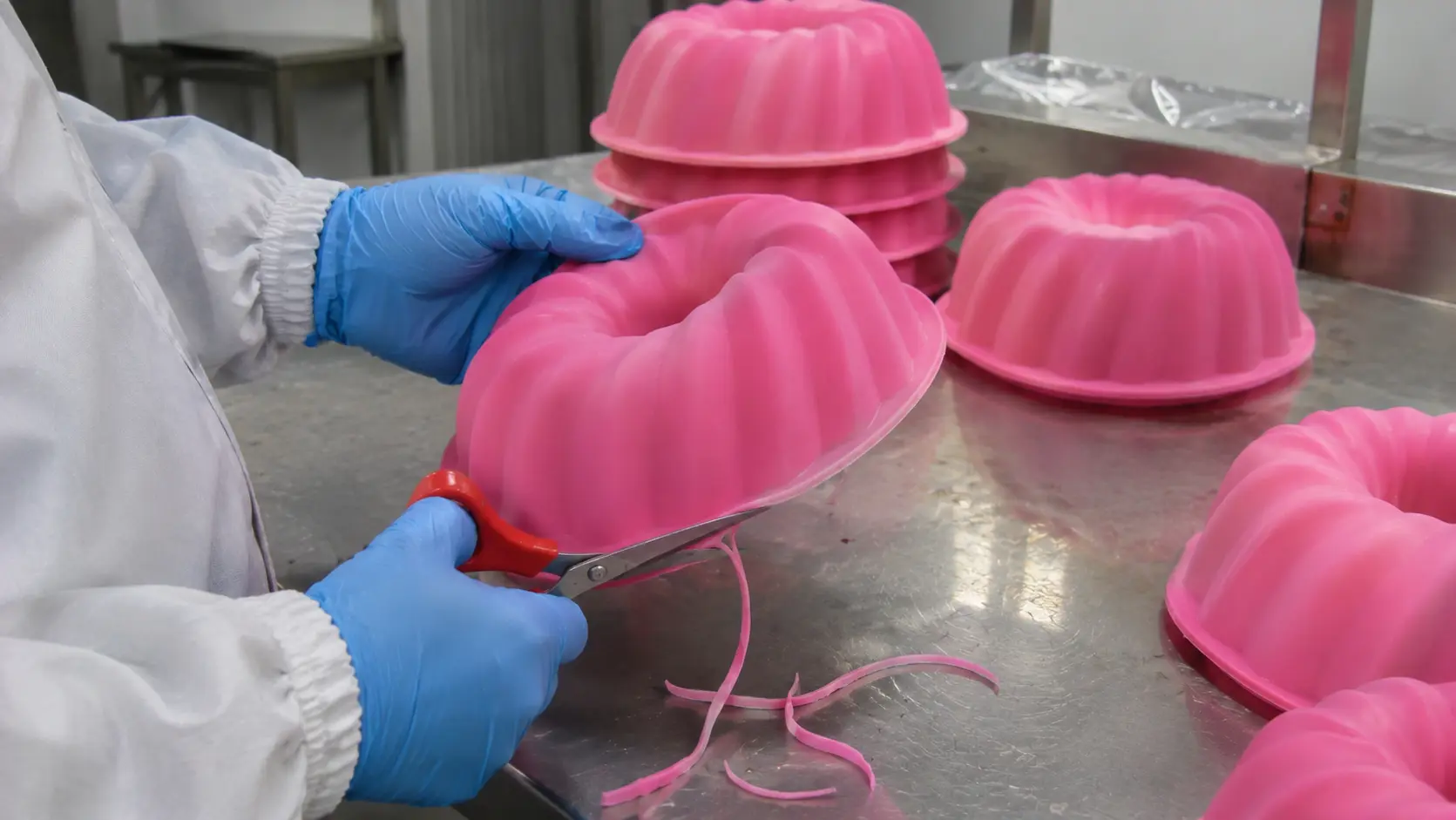
Why bake in silicone molds?
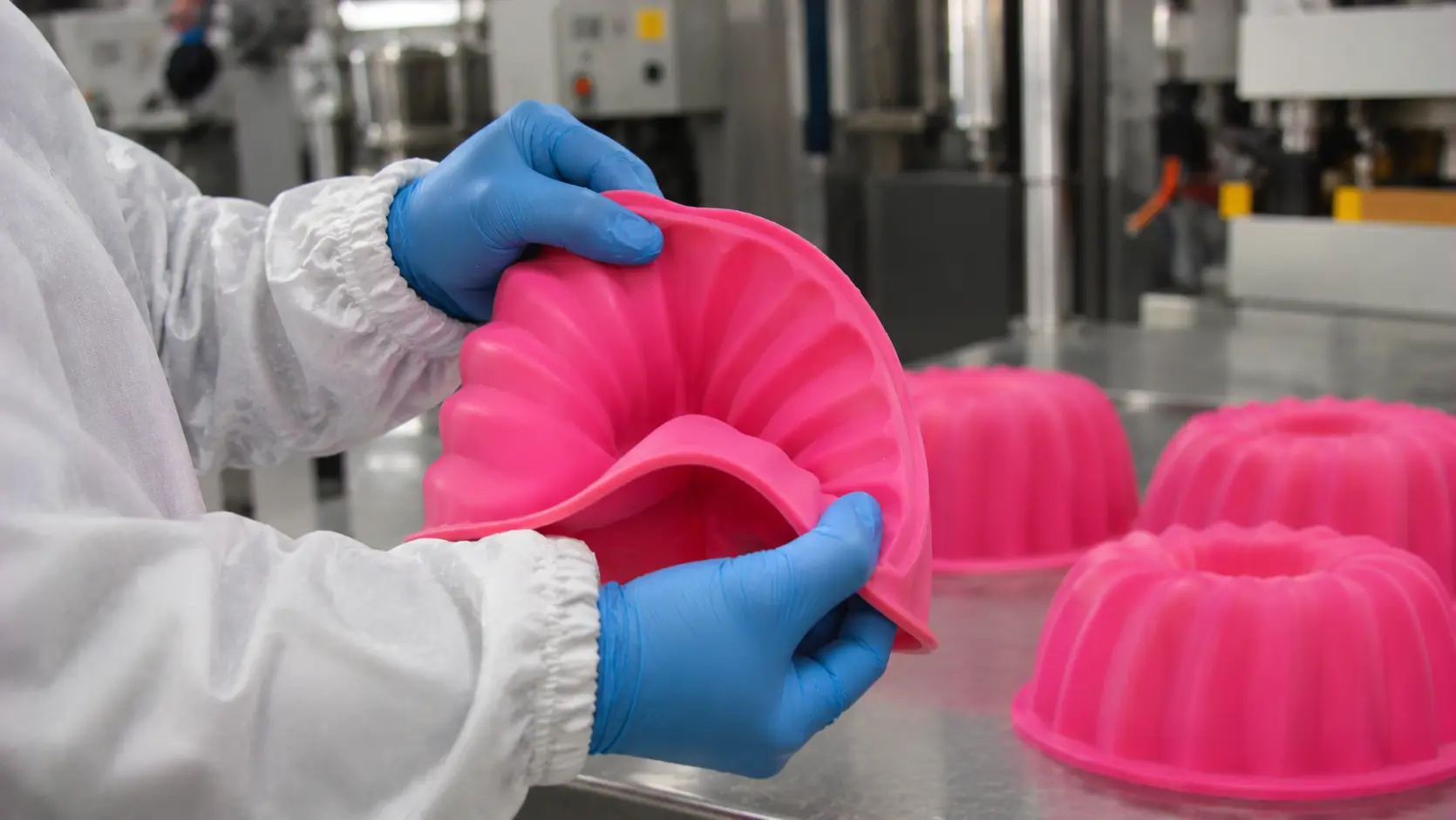
Silicone baking molds are flexible, so you can bend them to release cakes without breaking them. They need little or no greasing, do not rust, are light and easy to store, and can go from the oven to the freezer. They also come in shapes that are hard to make in metal pans.
Silicone cake molds vs metal cake pans
Metal pans heat quickly and give darker, crisper edges, which some bakers like for certain cakes. Silicone cake molds heat more gently, so cakes come out with soft, even sides, and they release by bending instead of tapping or cutting. Silicone also handles shapes that are hard to make in metal, such as detailed bundt designs, characters and mousse domes. Many professional kitchens use both: metal for basic layers and silicone for shaped cakes, mini desserts and anything that must look perfect.
- Silicone: soft, even sides and easy release
- Metal: darker, crisper edges
- Silicone: detailed and unusual shapes
Are silicone baking molds safe?
Yes, when they are made from food-grade silicone and fully cured. Food-grade platinum silicone does not react with food or add any taste or smell. In the USA, silicone for repeated food contact is covered by FDA rule 21 CFR 177.2600, so ask your supplier which silicone they use.
Heat resistant vs high temperature silicone molds
Every food-grade silicone mold is heat resistant, usually up to about 446°F (230°C). A high temperature silicone mold uses a grade made for even higher heat, which suits long baking, very hot ovens, caramel and hot sugar work. We confirm the heat limit for your mold with every order.
How to bake in silicone molds
Silicone is soft, so place the mold on a flat metal baking tray before you fill it. Fill it the same way you would a metal pan and bake as normal, staying within the heat limit. Let the cake cool for a few minutes, then gently bend the mold to release it.
- Always use a flat tray under the mold
- Stay within the heat limit
- Cool a little before removing
Do I need to grease silicone cake molds?
Usually not. Silicone does not stick easily. For very soft or sticky cakes, a light coat of oil or baking spray can help, especially the first few times you use a new mold.
Using molds for mousse and frozen desserts
Mousse cakes and frozen desserts set best in smooth, firm silicone molds. Fill the mold, freeze until solid, then bend the mold to release a clean, sharp dessert. Silicone ice pop and ice ball molds work the same way.
Fondant and cake decoration molds
Fondant molds are small, detailed molds for flowers, lace, letters and shapes. Press fondant or gum paste into the mold, trim the extra and gently bend the mold to release the decoration. A light dusting of cornstarch helps with very fine detail.
Custom baking shapes
If you want a cake or dessert shape that no one else sells, we can make it from your drawing, photo or sample. Custom shapes are popular with cake studios, hotels and dessert brands that want a signature product.
What affects the price?
The price depends on the size of the mold, the number of cavities, the silicone grade and whether the shape is standard or custom. A custom shape needs a master model, which is a one-time cost. Repeat orders cost less.
Cleaning and storing baking molds
Wash molds in warm, soapy water or in a dishwasher, and dry them fully. Do not use knives or rough scrubbers. Store them flat or nested, away from strong smells, so they keep their shape.
How long do silicone baking molds last?
With good care, food-grade silicone baking molds can be used hundreds of times. Replace a mold if it becomes sticky, cracked or starts to hold smells.